
Entering the Olympic spotlight with the production of ‘Rosso volante’, the official Rai film for Milano Cortina 2026 dedicated to Eugenio Monti. Gianluca Cannizzo—founder of Wonder Film, Wonder Project, and Wonder People—discusses entertainment as a strategic platform bridging content, brands, and major national events.
by Lorenzo Menichini
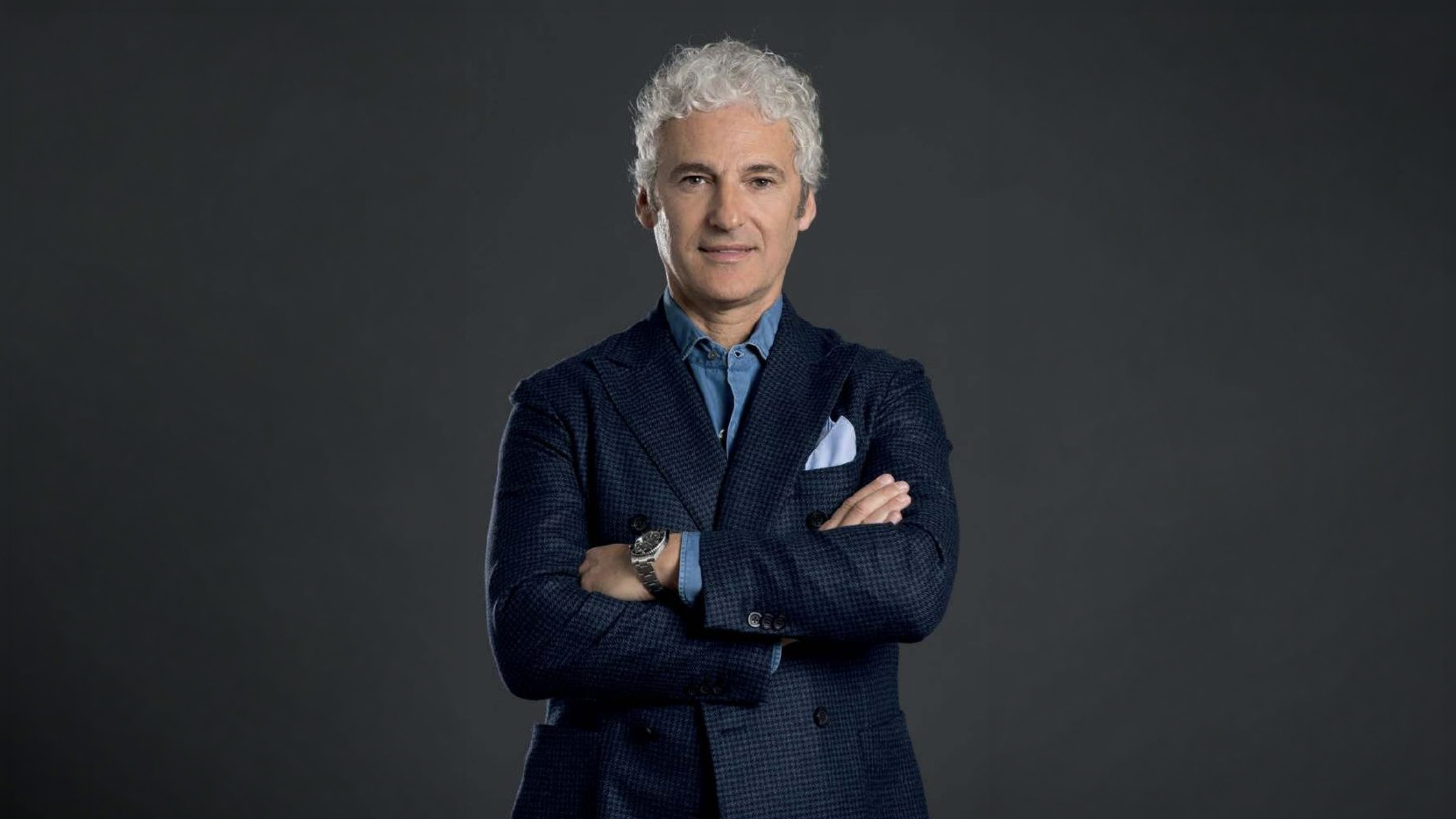
A well-oiled business machine where events, management, and film production fuel and support one another. Even while remaining three separate and distinct corporate entities. This is the model created by Gianluca Cannizzo, a Roman entrepreneur at the helm of the Magnifica holding company. Magnifica controls Wonder Film, Wonder Project, and Wonder People—companies that, together, constitute one of the most important hubs in the Italian entertainment industry, with an annual turnover of 20 million euros and about forty employees between Rome and Milan.
To describe this reality, we begin with ‘Rosso volante’, the official Rai film for the Milano Cortina 2026 Olympic Games, which tells the story of the Italian bobsleigh champion Eugenio Monti. A feature film produced by Wonder Film which, for the filming in Cortina, recreated the settings of two Olympic editions from the 1950s and 60s. Monti was one of the greatest bobsledders of all time: nine world titles, seven in the two-man bob. It is no coincidence that the new bobsleigh track in Cortina d’Ampezzo—one of the symbolic venues of the 2026 Games—is named after Monti. This project was strongly championed by the then-president of the Veneto Region, Luca Zaia, as an investment in identity as well as sports: to restore a historic infrastructure to Cortina and link it to a figure capable of representing the best of Italian sports.
It is in this context that ‘Rosso volante’ fits in, a film directed by Alessandro Angelini and starring Giorgio Pasotti, who was also among the project’s inspirations. A Rai Fiction-Wonder Film-Wonder Project co-production, made with the contribution of the Veneto Region and the support of the Veneto Film Commission foundation, ‘Rosso volante’ thus becomes part of a larger design: cinema, sport, and territory coming together. The broadcast, in prime time on Rai 1 on February 23rd, closes the circle with Cortina once again becoming an Olympic capital.
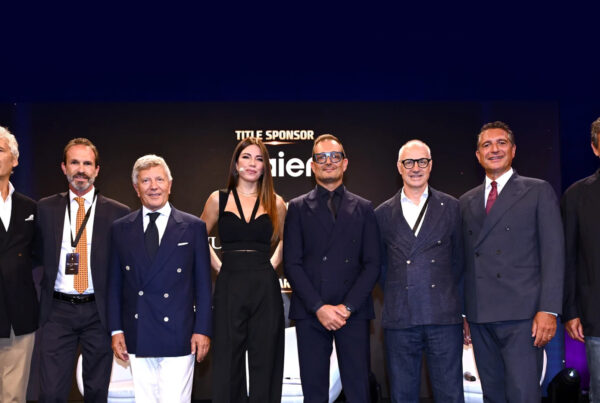
The launch event, held in Cortina on January 24th, was managed by Wonder Project, the company that organizes events and the most profitable within the holding. For social media communication and celebrity management, Wonder People stepped in—the talent agency through which Cannizzo took his first steps in the world of entertainment.
The ‘Rosso volante’ case is an example that clearly illustrates the synergies Cannizzo has managed to create across his businesses. These roots go back a long way: “The vocation for entertainment was born along the way,” the producer tells Prima Comunicazione; impeccably dressed, sitting behind the desk of his office spanning two floors in the Prati district (Vittorie), the heart of Rome’s cinema and TV hub. “I started as a chartered accountant, far from the idea of becoming an entrepreneur. However, I had clients in the show business world and, slowly, they involved me in that world. In 2001, I founded my first press office and talent management agency. From there, the path expanded with the opening of a company in London specializing in events and video productions for the fashion world, and then a dedicated events company in Italy.”
At the beginning of 2010, Cannizzo found himself involved in various companies between communication and entertainment, “but my entrepreneurial vision was contrary to that of my partners,” he says; “I was projected toward the future, prone to risk and investment. So, I liquidated all my shares and decided to embark on an independent path, opening two companies: Cannizzo Management (talent agency, in 2011) and Cannizzo Produzioni (events, in 2013). With the 2024 rebranding, these would become Wonder Project and Wonder People.”
The last 15 years have seen Cannizzo’s activity expand significantly in the events sector. Wonder Project specializes in the conception, design, and production of major events, product launches, roadshows, and corporate conventions. Scrolling through the list of projects from the past year, many automotive clients stand out (Porsche, Byd, Atflow, and even motorcycles with Ducati), energy (Axpo, Snam), retail (Todis, Esselunga), as well as BAT with the Glo brand initiatives, Ita Airways, and major gatherings like the Private Banking Forum or the Gran Galà del Calcio. There is also no shortage of clients from the banking and insurance world (most notably, a privileged relationship with Banca Generali). On the occasion of the 2026 Winter Games, Wonder Project managed events and activations for various clients including ITA, and inaugurated and managed Casa Esselunga in Cortina (which later became Casa Italia).
“90% of our work is with long-standing and loyal clients,” says Cannizzo, “Porsche and Banca Generali, for example, but we work with many large companies on projects of all types, from 10,000 euro to 4.5 million euro commissions. Today, after expanding and diversifying our clientele, we have about thirty clients, receive 300 commissions a year, and turn over around 15 million.”
In recent years, the events sector in Italy has grown significantly. 2024 data reported by Il Sole 24 Ore highlights that Italy is second only to the USA for major events organized annually, with 92% of companies choosing to invest in them and a turnover exceeding one billion annually—growing and in full recovery from the pandemic period. Yet, more market also means more competition, and clients are willing to invest in single projects. As Cannizzo explains, companies today are more structured: they have internal departments dedicated to events that are very cost-conscious and compile long budgets, with every expense item broken down to the highest level of detail. For many in the sector, the solution is to merge to grow larger and benefit from economies of scale. This is not Cannizzo’s idea: “For me, the game is won by finding the best talents. In the last year, we have significantly strengthened the team and are always looking for new figures, especially creatives, to hire.”
Between the COVID years, Cannizzo decided to dive convincingly into another business: audiovisual content production. “This activity also started thanks to my relationship with talents, who over time involved me in various productions—initially small, then increasingly larger, thanks to my established relationships with broadcasters. From there, the first film was born, ‘Abbi fede’ (made in 2019, directed by and starring Giorgio Pasotti, not released in theaters due to the pandemic: Ed.).”
From that experience, the working relationship between Cannizzo and Pasotti began, consolidating between 2024 and 2025 with the creation of Wonder Film, owned 50/50 by the two. After ‘Abbi fede’, they produced ‘Ritratti di cinema’, a documentary in collaboration with Rai Cinema featuring interviews with nine iconic directors including Martin Scorsese and Tim Burton, and ‘Rosso volante’. But more are on the way: ‘Sotto a chi tocca’, a comedy directed by Pasotti with Rocco Papaleo and Stefano Fresi, and a period film set in 14th-century Venice.
“Navigating the world of audiovisuals is extremely difficult,” argues Cannizzo. “First of all, the tax credit: it is a central theme, and the uncertainty surrounding it is a problem; it’s stalling the market. We have to make financial plans without knowing if and how much we will be covered. But I am fairly confident that the government will find a solution. And then there is the issue, here too, of budgets that are increasingly tight, in the face of very high-level production requirements. The challenge is to find new and original content that people like.”
Just launched, Wonder Film records revenues of 5 million, awaiting data from the next fiscal year which will certify the numbers for the first year of actual activity. To these are added the 15 million from Wonder Project (of which Cannizzo holds 93%) and one million from Wonder People (of which he holds 80%). Faced with an entertainment market that has increasingly become a land of acquisitions and mergers, Cannizzo does not close his doors. Even though, when his company was the subject of interest from a potential buyer, he said no: “But I never reject anything a priori. Throughout my career, I have always been open to novelty and in search of opportunities. And if there is one, I go and take a look.”